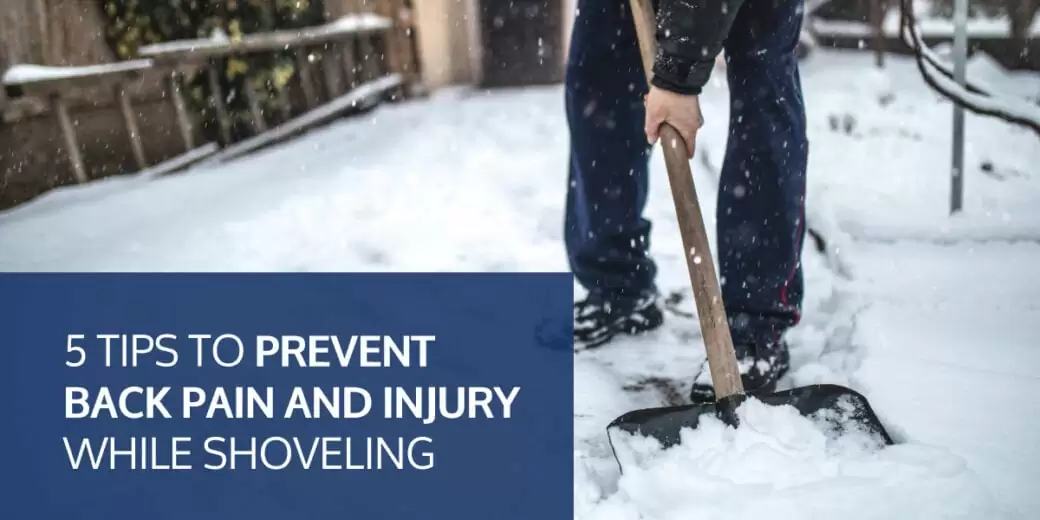
5 best snow shoveling techniques to prevent back injuries:
- Warm up beforehand to prevent low back pain
- Dress properly
- Pick the right snow shovel
- Use proper form
- Pace yourself and take breaks
Winter has returned to Wisconsin, which means it’s snow shoveling season again. This brings up an important question: What’s the best snow shoveling technique to avoid being one of the 11,500 people who get injuries each year from shoveling.
To help you keep low back pain at bay, we’ve put together five proper snow shoveling techniques that will help you prevent low back pain—as you keep your sidewalks and driveways snow-free.
Warm up beforehand to prevent low back pain
Cold muscles are more easily injured, so before you start moving snow, start by moving your body. Begin by walking or marching in place for a few minutes. Once you’ve warmed up, stretch the muscles in your arms, shoulders legs and back.
If you must shovel first thing in the morning, be certain to pace yourself, start slowly and give your body time to warm up after a night of sleeping and inactivity.
Dress properly
Cold weather causes your blood vessels to constrict, reducing the blood supply to your muscles. Dress in layers to keep your body temperature up, which will improve blood flow and keep providing the oxygen your body needs while moving.
And warmth is only part of the equation. A water-resistant exterior layer will keep moisture away, while boots with a good tread will help prevent you from slipping or falling on ice and snow.
Pick the right snow shovel
All shovels are not created equal. The right shovel not only helps to prevent low back pain, but it also makes the job easier. Choose a shovel that has a:
- Sturdy handle.
- Proper handle length. To determine if the shovel is right for you, place the blade of the shovel on the ground and make sure the handle reaches your elbow or chest.
- Use a light shovel. Plastic shovels are lighter decreasing pressure on the back when lifting snow but scraping hard snow and ice is usually easier with a metal shovel.
Use proper form
Good form is a key part of proper snow shoveling technique. When you shovel, always try to push the snow, instead of lifting it.
If you must lift the snow, prevent back injuries by:
- Squatting with legs apart, knees bent and back straight. Life with your legs, not your back.
- Hold your shovel with one hand on the handle and the other about 12 inches lower on the shovel.
- Scoop small amounts of snow with the shovel close to your body. Holding a full shovel of snow with arms outstretched puts you at risk for back injury because the weight is on your spine.
- Do not twist to throw snow over your shoulder or off to the side.
- Make sure your feet face the shovel to maintain good alignment.
Pace yourself and take breaks
You have a better chance of preventing lower back pain by pacing yourself. Instead of waiting for all the snow to fall and then straining under the weight, the best snow shoveling technique is to keep pace with the storm and perform multiple shoveling sessions.
While this is more time-consuming, your lower back (and other muscles) will thank you.
It’s also important to rest frequently when shoveling. Take breaks to:
- Hydrate
- Warm up
- Lower your heart rate
These pauses will keep you from overworking and straining yourself.
How to treat back pain from shoveling
Stiffness or pain in your back after shoveling can indicate a strain or injury. Treat the pain by:
- Taking over the counter pain medications.
- Alternating ice and heat for 48 hours after straining yourself.
- Performing simple stretching exercises to prevent stiffness.
If your pain persists, worsens over time or interferes with your daily life, you might benefit from a physical therapy evaluation. Contact us today for quality care and personalized therapy to help you recover as safely and quickly as possible. Our physical therapists can help reduce your pain and maximize your strength.