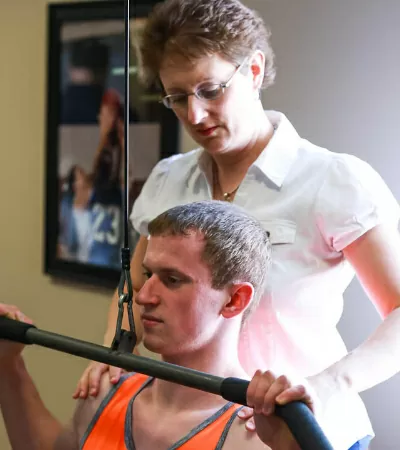
Freedom from Sciatica Pain

Freedom from Sciatica Pain
Are you dealing with burning, shooting pain that radiates from your lower back into your foot? This is the hallmark of sciatica, an often misunderstood nerve condition. While sciatica can be extremely painful–and often debilitating–you don’t need to despair. Physical therapy at Excel Physical Therapy has solutions to help you find relief.
Sciatica is named for the sciatic nerve, one of the primary nerves in your body. Its roots are located in your lower back, and the nerve runs through the buttocks and down the back of the leg into the foot. While some people will refer to any pain in the lower extremities as sciatica, the term only refers to symptoms that stem from the sciatic nerve.
To help you better understand sciatica and what physical therapy can do to help, we want to share a case study of one of our patients, a 55-year-old woman we’ll call Kim. If you suspect you may have sciatica, schedule an appointment with us today!

Exploring Kim’s Symptoms
Kim’s pain was quite severe. She mostly felt it in her right leg–a shooting, electric pain that seemed to split down the back of her calf muscle. Occasionally, she felt a dull ache in her lower back, but her leg pain caused her the most trouble. It was worse when she was bending forward or sitting for long periods.
The other issue–and the reason she ultimately found her way to our clinic–was that she also experienced a persistent pins and needles sensation down the back of her leg, which alarmed her. As her leg began to feel weak and heavy, she knew her symptoms weren’t going away on their own.
Identifying the Root Cause
Our physical therapists listened to Kim explain her symptoms and then performed a comprehensive physical evaluation to assess her strength, range of motion, and key areas. We also took a complete health history.
While we could confidently say Kim had sciatica, it was more important for us to determine why she had it. The truth is that sciatica isn’t so much a condition in and of itself as a sign that something is wrong with the sciatic nerve–usually that it’s been compressed or irritated.
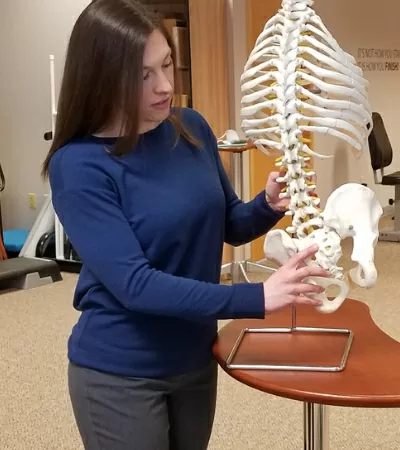
So we dug a little deeper and confirmed what we suspected: Kim had developed a herniated disc. Herniated discs occur when the cushiony material between the spine’s vertebrae bulges outward. In Kim’s case, that bulging disc was pressing against a nerve root in her back, sending symptoms radiating down the sciatic nerve.
Addressing the Issue
Once we knew Kim’s sciatica had developed due to a herniated disc, we were able to create a personalized treatment plan to address it. Fortunately for Kim, physical therapy is an excellent way of resolving pain from a herniated disc.
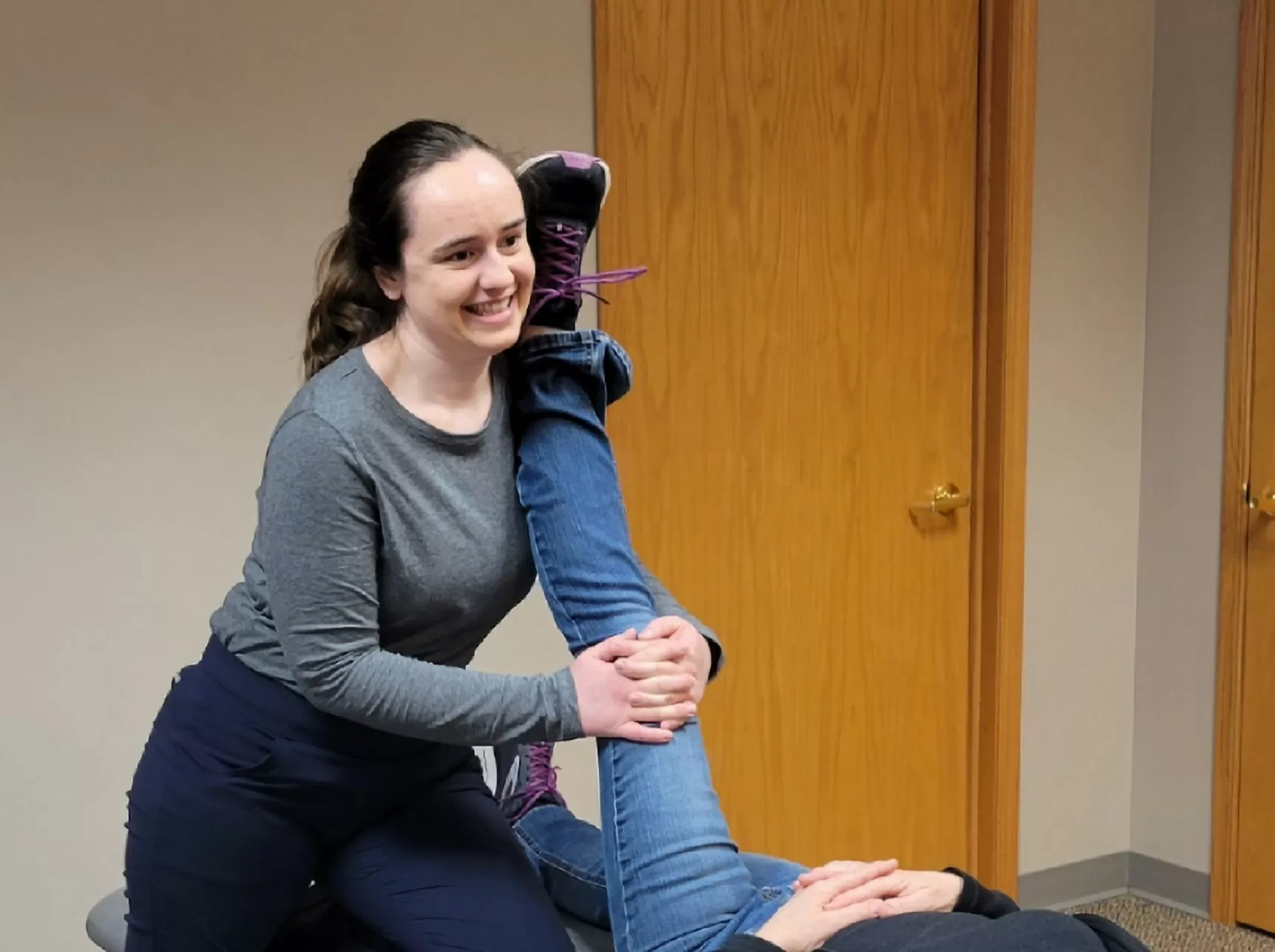
We began with acute pain management, particularly through manual therapy techniques like spinal mobilizations (guiding the back through its current range of motion) or soft tissue manipulation (a massage-like manipulation of the muscles and other tissue).
These techniques offered acute pain relief so Kim could continue progressing with a personalized treatment program. At first, we focused on specific back stretches and encouraged Kim to walk around her block a few times a week.
As she improved, we began incorporating core strengthening exercises, too. Why core strength? Well, your core muscles support and stabilize the spine; the stronger they are, the more support they offer the lower back. We guided her through a progressive series of exercises, increasing the intensity as she got stronger.
Finally, we gave Kim the tools she needed to prevent future herniated discs. Namely, we encouraged her to stay active, maintain her spine mobility, and continue strengthening her core. We also showed her proper lifting technique so she would be less likely to injure herself.
Find Your Own Sciatica Relief Today
If you have sciatica symptoms, you don’t have to suffer! The team at Excel Physical Therapy can help you pinpoint the cause of your sciatica and find a solution that works for you. Call us today to get started.

Find Relief Now – Schedule Your Free Consultation!
Ready for personalized care?
Come back to Excel Physical Therapy and book your session today!

Sarcopenia: A Quick Dive
There’s no denying that health problems and aging cause a host of physical and mental changes. One of the more significant of these is a decrease in muscle mass. For most people, it begins in their 30s and 40s, then jumps into high gear in their 60s.
Age-related muscle mass loss happens to everyone to some extent. However, some people suffer loss of muscle mass, strength, and endurance to such a degree that it severely compromises their ability to be physically active. This condition is known as sarcopenia.
Symptoms, Causes, and Effects
Sarcopenia primarily stems from the effects of aging and certain health conditions primarily affecting people 60 years or older. Certain risk factors can make it more likely that you develop sarcopenia, including the following:
- A sedentary lifestyle
- Chronic diseases, including diabetes and kidney disease
- Inadequate protein intake
- A decline in certain bodily functions related to building muscle
- Use of medications for weight loss or bariatric surgery.
People with sarcopenia lose their muscle mass more quickly than those who don’t, which leads to muscular weakness and overall frailty. This, in turn, can negatively affect your quality of life. You may…
- Lose stamina more quickly
- Have difficulty with mobility, including walking or climbing stairs
- Have poor balance and be more likely to fall
- Find daily activities more difficult
How Excel Physical Therapy Helps with Sarcopenia
The good news is that you can manage sarcopenia with a few simple lifestyle changes, namely regular physical activity, resistance exercise and improved nutrition. These factors can also help prevent sarcopenia, keep it from progressing or even reverse it.
However, remember that some muscle mass loss is just part of getting older and can result in injuries, decreased confidence and difficulty moving. Our physical therapists can help you stay active and strong as you age.
Follow Us on Facebook!
Clinic News

Bob ran the Bellin Run 10k in Green Bay in June.

Stephanie just got back from her amazing trip to Iceland!

Success Story
Josie M.
Serena and Kayla were very welcoming and always greeted me with a smile. Dr. Van Aacken was knowledgeable and helpful in resolving my symptoms. She explained the muscles and their functions to me and how they were causing me trouble, which I appreciated.
4th of July Word Scramble
cemarai
elidtrncoaa
orkrfsiwe
ddieceenpenn
uraeecbb
beiyltr
Answer Key
america
declaration
fireworks
independence
barbecue
liberty
Healthy Recipe:
Pink Sunrise Strawberry Smoothie

- 1 cup frozen strawberries
- 1/4 cup frozen raspberries
- 1/4 cup blueberries
- ½ – 1 small beet frozen
- 1 ripe banana
- 1/2 cup kefir
- 1/2 cup milk – regular, nut, coconut, hemp, etc.
- 2 tbsp honey (optional)
- 1 tbsp hemp seeds
- 1/2 cup ice
Place all ingredients into a high-speed blender. Run on the smoothie setting or on high for 1-2 minutes or until completely smooth. Serve and enjoy!