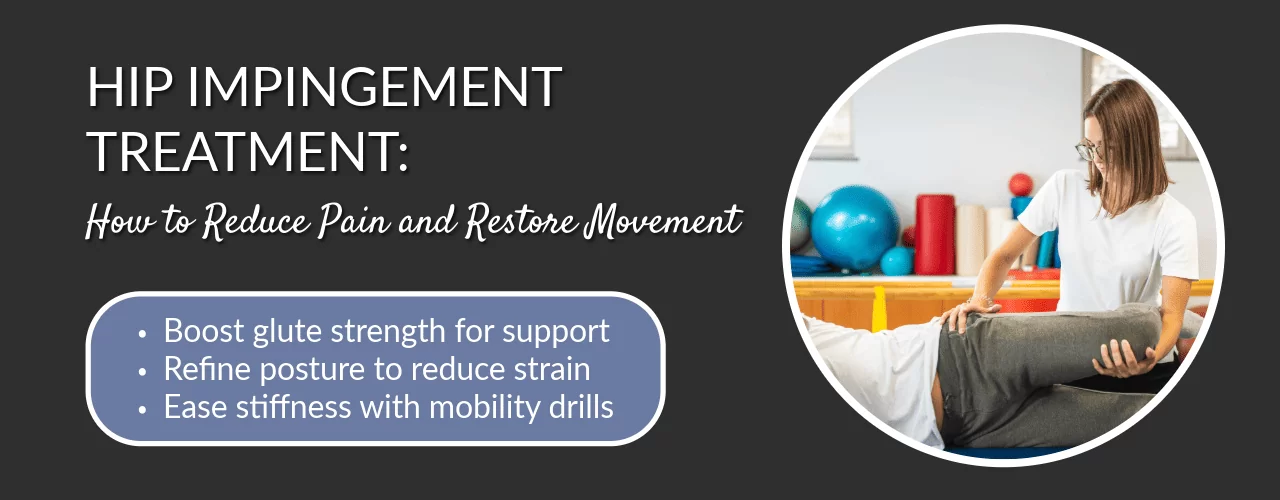
Hip impingement, also known as femoroacetabular impingement (FAI), happens when abnormal contact between the hip bones causes pain, stiffness, and limited motion. This condition often affects active individuals, especially those involved in sports or repetitive hip movements. The good news is that with a structured approach to hip impingement treatment, many people find long-lasting relief and improved mobility. At Excel Physical Therapy, our physical therapy programs are designed to reduce discomfort, improve joint mechanics, and help patients return to the activities they enjoy.
Seven Steps to Relieve Hip Pain
1. Start with a Movement Assessment
Before you jump into stretches or exercises, make sure you know which movements aggravate your symptoms. A movement assessment by a physical therapist can identify specific limitations in strength, mobility, or joint alignment. If you’re not working directly with a therapist yet, track when the pain starts, what positions increase discomfort, and how long it lasts. These insights will guide your hip impingement treatment plan.
2. Try Gentle Hip Mobility Drills
Stiffness in the hip joint can worsen impingement symptoms. To help ease discomfort, perform simple mobility exercises to improve joint motion.
Try this:
- Begin by lying or sitting in hip circles to warm up the joint.
- Add controlled leg swings front to back and side to side.
- Always move within a pain-free range and avoid forcing the motion.
Consistency is more important than intensity, so aim to include these drills a few times each day.
3. Focus on Strengthening the Glutes
Weak gluteal muscles can place extra strain on the hip joint. Targeted strengthening helps stabilize the pelvis, reduce stress on the hip, and support better movement patterns.
What to do:
- Include exercises like bridges, clamshells, or standing hip abductions.
- Perform each movement slowly and with control.
- Focus on muscle engagement over weight or resistance.
Strengthening the surrounding muscles is a cornerstone of effective hip impingement treatment.
4. Adjust Your Sitting and Standing Habits
Extended sitting and poor posture often aggravate hip impingement symptoms. Small changes in your daily routine can reduce unnecessary pressure on your hip joints.
Helpful adjustments:
- Sit with your knees slightly lower than your hips and avoid crossing your legs.
- Use a lumbar support or cushion to maintain a neutral spine.
- Take standing or walking breaks every 30 to 45 minutes.
- Avoid standing with all your weight shifted to one side.
These simple changes support recovery between therapy sessions.
5. Use Ice Strategically for Pain Relief
While ice does not eliminate inflammation, it can help reduce pain in the short term. Use it after periods of activity or at the end of your day to help ease discomfort.
How to use it:
- Apply a cold pack to the front of the hip for 10 to 15 minutes.
- Use a towel or cloth between your skin and the ice to prevent irritation.
- Avoid icing before movement or exercise sessions, as cold muscles are less responsive.
Combine icing with other physical therapy strategies for the best results.
6. Be Mindful of Overuse
Overtraining or repeating the same movement patterns can lead to irritation and delayed recovery. Rest is part of the healing process, but so is smart activity modification.
Tips for managing overuse:
- Vary your workouts or switch to low-impact exercises like swimming or cycling.
- Avoid deep squats, aggressive stretches, or twisting movements during flare-ups.
- Communicate with your therapist to adjust your program based on pain levels.
- Track your symptoms and activity to find patterns that trigger pain.
Staying active is important, but so is giving your hip time to recover.
7. Stick with Your Physical Therapy Plan
One of the most important parts of hip impingement treatment is consistency. The more closely you follow your prescribed exercises, stretches, and education from your physical therapist, the better your long-term results.
Your therapist will:
- Monitor your progress
- Adjust your plan as your mobility improves
- Help you return to sport or daily activity safely
A guided plan ensures you avoid setbacks and build strength the right way.
Ready to Move with Less Pain? Contact Excel Physical Therapy Today
If hip impingement is slowing you down, know that relief is possible. The team at Excel Physical Therapy is ready to help you reduce pain, improve motion, and get back to the things you love. With individualized care plans and a hands-on approach, we support every step of your recovery.
Reach out today to schedule your first visit. Let us help you regain comfort and confidence in your movement.