



Rebuilding strength is an important aspect of rehabilitating after injury or surgery. Unfortunately, pain and weakness during this process can often limit how much you can lift or how hard you can exercise.
That’s why Excel Physical Therapy is proud to announce that we’re now offering blood flow restriction (BFR) therapy, a unique approach that allows you to restore strength without heavy resistance loads.
Everything You Need to Know About Blood Flow Restriction Therapy
One of the biggest challenges in rehab is the gap between rest and full activity. Too much rest leads to weakness. Too much strain can delay healing. BFR helps bridge that gap, allowing you to stay active and rebuild strength while still protecting healing tissues.
What does this mean for you? In most cases, better progress and a smoother return to the activities you enjoy.
Let’s take a look at some common questions about BFR therapy to help you better understand this exciting new treatment option.
How Does It Work?
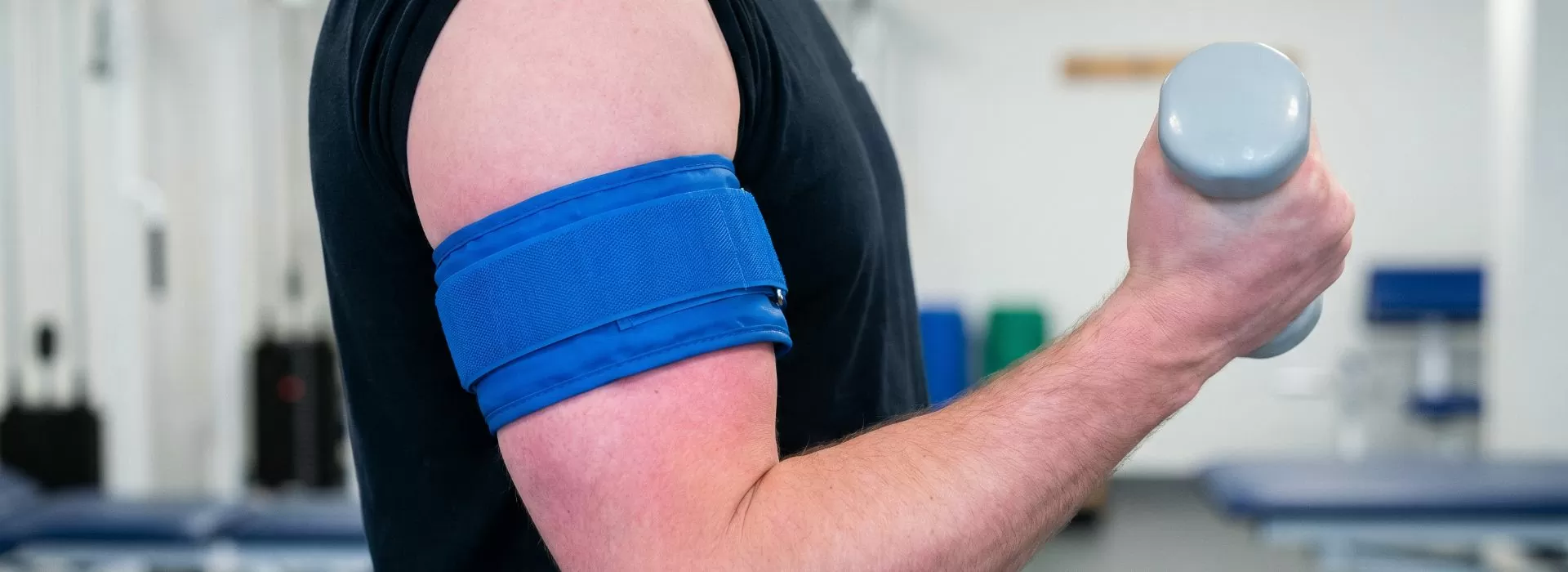
As the name suggests, BFR therapy works by restricting blood flow in a controlled way during exercise. Our team will place a specialized cuff around your arm or leg, which limits blood flow out of the working muscle while still allowing blood to enter. This creates a controlled environment where the muscle works harder than expected with light resistance.
As a result, your muscles respond as if you are lifting heavy weights, even though you are using much lighter ones. This allows you to build meaningful strength gains and muscle growth without placing high stress on joints or healing tissues. Here’s how:
- Fast-twitch muscle fibers (used for strength and power) are recruited earlier.
- BFR stimulates the release of growth hormone and other factors that support tissue repair.
- Boosting protein synthesis helps your body rebuild and strengthen muscle tissue.
- Improved circulation over time encourages vascular health and efficiency.
Why Use BFR Instead of Regular Strength Training?
Traditional strengthening typically requires moderate to heavy weights. While this is a great choice for most people, it’s not always appropriate, especially if you are:
- Recovering from surgery
- Managing joint pain or arthritis
- Dealing with tendon or ligament injuries
- Experiencing muscle loss after inactivity
BFR allows you to train safely while still making progress.
Who Can Benefit from BFR Therapy?
We generally recommend it for anyone who needs to limit joint stress while rebuilding strength, such as people experiencing:
- Post-surgical weakness
- Chronic joint pain, including arthritis
- Loss of muscle mass after injury or immobilization
- Tendon injuries, such as patellar or Achilles tendon pain
- Balance or mobility deficits where strength is limiting movement
What Are Some of the Key Benefits of BFR Therapy?
- Increase muscle strength comparable to traditional high-load training
- Improve muscle size with low resistance exercise
- Reduce stress on healing joints and tissues
- Support earlier return to activity after injury or surgery
- Enhance functional outcomes like walking, climbing stairs, and performing daily tasks
What Can I Expect During a BFR Session?
Our team will always guide you through your BFR therapy plan to ensure safety and effectiveness.
Before your program begins, we’ll screen your medical history and determine if BFR therapy is a good choice for you. There are some conditions where it’s not recommended, such as active blood-clotting disorders or certain vascular conditions. Our team will guide you through what’s best for your situation.
During a session, we’ll start by placing a BFR cuff on your upper arm or thigh, depending on the area we’re strengthening. Your therapist will then carefully calibrate the cuff to your body.
The cuff will stay in place as you perform low-load exercises such as leg lifts, squats, or arm curls. Generally, you’ll perform short sets with higher repetitions and brief rest periods.
As you exercise, our therapist will closely monitor your cuff and adjust the restriction as needed.
Discover if Blood Flow Restriction Training is Right For You
If you’ve been limited by pain, injury, or post-surgical restrictions, blood flow restriction therapy may be the missing piece in your recovery plan. The team at Excel Physical Therapy is here to learn more about your condition and recovery goals and develop a program that meets your needs.
Schedule an appointment today to learn whether BFR could play a role in your physical therapy plan.