Work Injury Warning Signs You Shouldn’t Push Through

Work Injury Warning Signs You Shouldn’t Push Through
No one wants to deal with pain after a long day on the job, whether it’s an ache in your back or a twinge in your shoulder. Unfortunately, the workplace often leads to overuse injuries, especially in the back, knees, and shoulders.
Work-related overuse injuries often start small: a dull ache or a little stiffness the next morning. But when left unaddressed, that minor pain can turn into lost sleep, missed workdays, and limited function.
Back, knee, and shoulder injuries are among the most common workplace injuries we see at Excel Physical Therapy. However, the sooner you address your symptoms, the faster and more fully you can recover.
What You Need to Know About Common Work Injuries

Back Injuries
Back injuries can sometimes develop due to sudden trauma, like after a slip or fall, or while lifting something too heavy. However, overuse back injuries are also quite common, typically resulting from repetitive lifting or improper lifting form that compounds damage over time.
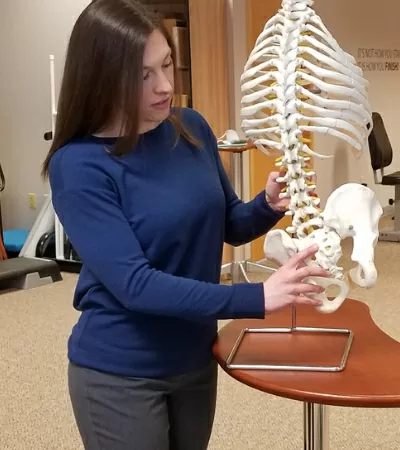
These movements can affect several tissues and structures in the back, including the muscles, spinal ligaments, and spinal discs, which are cushion-like structures between the vertebrae.
Signs Of A Back Injury
- Pain lasting more than a few days
- Pain that travels into the buttock or leg, which indicates possible nerve irritation
- Numbness or tingling, another sign of nerve irritation
- Weakness in one leg
- Pain that worsens with sitting or bending
Many people mistakenly believe rest is the best way to manage a back injury, but actually, guided physical activity leads to better outcomes. So if you notice any of the above symptoms, give our team a call!
Knee Injuries
Work-related knee injuries are common in jobs that involve lots of squatting or kneeling movements or that require you to spend time climbing ladders or carrying heavy loads. These stresses can irritate the tendons, ligaments, and cartilage in the knee.
Signs Of A Knee Injury
- Swelling
- Clicking or catching whenever you move the knee joint
- Pain going up or down stairs
- Instability or a feeling of your knee giving way
- Stiffness after sitting
Knee pain rarely improves with rest alone. Guided strengthening in the muscles that surround the knee joint helps long-term function and reduces recurrence. Our team can also help you restore balance and stability, which helps protect your knee.
Shoulder Injuries
Shoulder injuries often occur in jobs requiring repetitive overhead work, lots of heavy lifting (particularly lifting objects away from the body), and pushing, pulling, or reaching movements. Many of these injuries involve the rotator cuff, which is a group of muscles that stabilize the shoulder.
Signs Of A Shoulder Injury
- Pain when lifting your arm
- Pain reaching behind your back
- Night pain when lying on that side
- Weakness with overhead tasks
- A catching sensation in the shoulder joint
As with other injuries, active rehabilitation is useful for managing shoulder injuries. Early care with our team is particularly important for reducing the risk of chronic shoulder pain.
How Our Team Helps Address Work Injuries
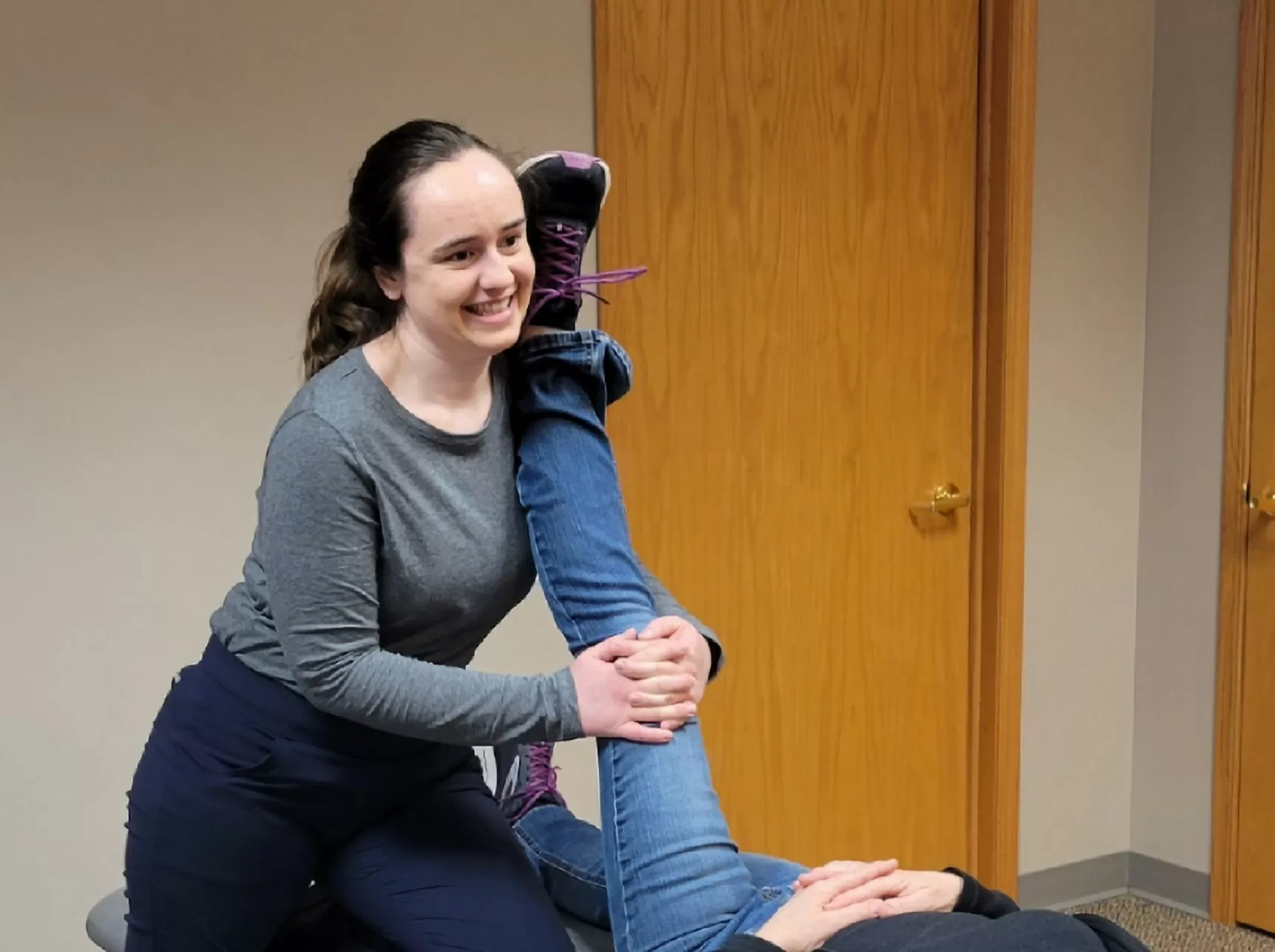
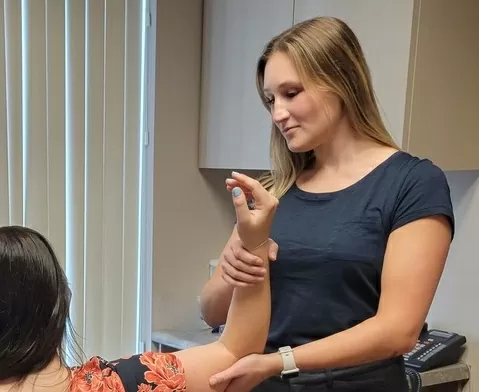
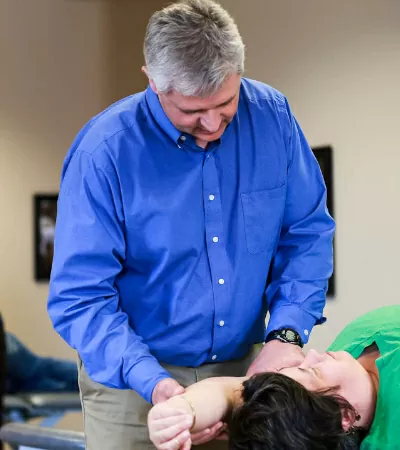
At Excel Physical Therapy, we understand that every work injury is different–and so are your specific job tasks. That’s why we stress personalized care plans that start with a thorough evaluation of your symptoms, health history, and overall recovery goals. We’ll also analyze your movement patterns, test your strength and mobility, and assess the functional tasks required for your job.
From there, we’ll create a plan tailored to your specific needs. Treatment plans will blend several different treatment techniques, including:
Hands-on manual therapy
or modalities such as dry needling to reduce pain and stiffness in the affected area
Therapeutic exercises
to gradually restore strength and mobility
Balance and coordination training
to reduce the risk of falling on the job
Ergonomic education
focused on proper body mechanics, activity modification, and job-specific strategies to reduce strain.
Work simulation
tasks to ensure you can do your job safely
We also have extensive experience with workers’ compensation cases, and we’ll maintain good communication with both case managers and employers to ensure a smooth return to work.
Don’t Wait to Address Work Pain
If you’ve experienced a work-related back, knee, or shoulder injury, the Excel Physical Therapy team is ready to help you move better and feel stronger. Call today to schedule an initial evaluation so we can get you back to work — and back to living — with less pain and more confidence.

Find Relief Now – Schedule Your Free Consultation!
Ready for personalized care?
Come back to Excel Physical Therapy and book your session today!
How Physical Therapy Helps With a Faster Return to Work

After a work injury, time matters. The longer pain or other symptoms limit movement, the more likely you are to develop compensations that will make it harder to return to full duty. However, early physical therapy shortens that gap.
After a work injury, the Excel Physical Therapy team is here to help you restore function and prepare your body for the real demands of your job.
PT and Work Injury Recovery: What You Need to Know
Physical therapy is highly effective for work injuries because it’s an active form of care. Your treatment will focus on what you can do today to help you improve tomorrow.
Early movement and guided exercise improve outcomes for common work-related injuries. For example, low back pain often improves with core stabilization exercises that support the spine. Tendon injuries respond well to gradual resistance training, while rotator cuff strains benefit from strengthening the small stabilizing muscles that control overhead movement.
Furthermore, treatment plans at Excel Physical Therapy always reflect your job tasks. Your therapist may simulate lifting, climbing, pushing, or sustained standing to help you be prepared for work demands before you clock back in.
An early approach also reduces fear of movement, which can lead to long-term complications if left unaddressed. Guided exercise rebuilds confidence along with strength.
Suffered A Work Injury? We’ve Got You!
Don’t wait for pain to settle on its own. If you’ve been injured on the job, schedule an evaluation today. Early PT at Excel Physical Therapy can help you recover faster, move better, and return to work with confidence.
Follow Us on Facebook!
Exercise of the Month
SQUATS
Stand with your feet shoulder-width apart and arms extended in front of you for balance. Slowly bend your knees and lower your hips as if sitting back into a chair, keeping your chest lifted and knees behind your toes. Push through your heels to return to standing.
3 Sets, 10 Reps.

Success Story
Lori
“I saw Hannah in Appleton at Excel’s brand new facility. My visits and experiences were filled with knowledge and understanding. Excel is the only place to go in my opinion. The staff is very caring and professional. I not only consider Hannah to be my therapist but a friend as well. She challenged me, cared for me, and helped me achieve my goals. My thanks to the entire Excel team!”
Staff Spotlight
Dr. Ryan Strupp
Dr. Ryan Strupp is a valued member of the team at Excel Physical Therapy, bringing both strong academic training and a competitive athletic background to his work. A graduate of Carroll University, Ryan earned his bachelor’s degree in Exercise Science while competing as a collegiate tennis player, and went on to complete his Doctorate of Physical Therapy in 2024.
Ryan is passionate about helping patients reduce pain, restore movement, and get back to the activities they love. He takes a well-rounded, hands-on approach to care, combining manual therapy, targeted exercise, and patient education to create personalized treatment plans that support long-term success.
Outside the clinic, Ryan enjoys staying active in the outdoors. Whether he’s hiking, fishing, hunting, or playing pickleball and tennis, he brings the same energy and enthusiasm to his hobbies as he does to helping his patients feel their best.



April Word Scramble
olofs
rwhesso
sutpli
aiprodsnr
tlaeacprilr
angrde
Answer Key
fools
showers
tulips
raindrops
caterpillar
garden
Enjoy This Healthy Recipe!
Mediterranean Chicken Salad

- 1 cup lemon juice
- 2 tbsp snipped fresh mint
- 2 tbsp snipped fresh basil
- 2 tbsp olive oil
- 1 tbsp honey
- ¼ tsp black pepper
- 5 cups shredded romaine lettuce
- 2 cups cut-up cooked chicken breast
- 2 plum tomatoes, cut into wedges
- 1 (15 oz) can garbanzo beans
- 2 tbsp pitted Kalamata olives
- 2 tbsp crumbled reduced-fat feta cheese
- 6 Whole kalamata olives
Fresh, vibrant, and full of flavor, this Mediterranean Chicken Salad is a delicious way to enjoy a healthy, satisfying meal. Packed with lean protein and crisp ingredients, it’s perfect for a light lunch or energizing dinner.
Directions:
In a screw-top jar, combine lemon juice, mint, basil, olive oil, honey, and black pepper to make dressing. Cover and shake well. Place lettuce on a large platter. Top with chicken, tomatoes, garbanzo beans, the quartered olives (if using), and feta cheese. Drizzle with dressing. If desired, garnish individual servings with whole olives.